
Best Online Courses for Students Planning to Study Abroad (2026)
Studying abroad begins long before stepping onto an international campus. The most successful inte...

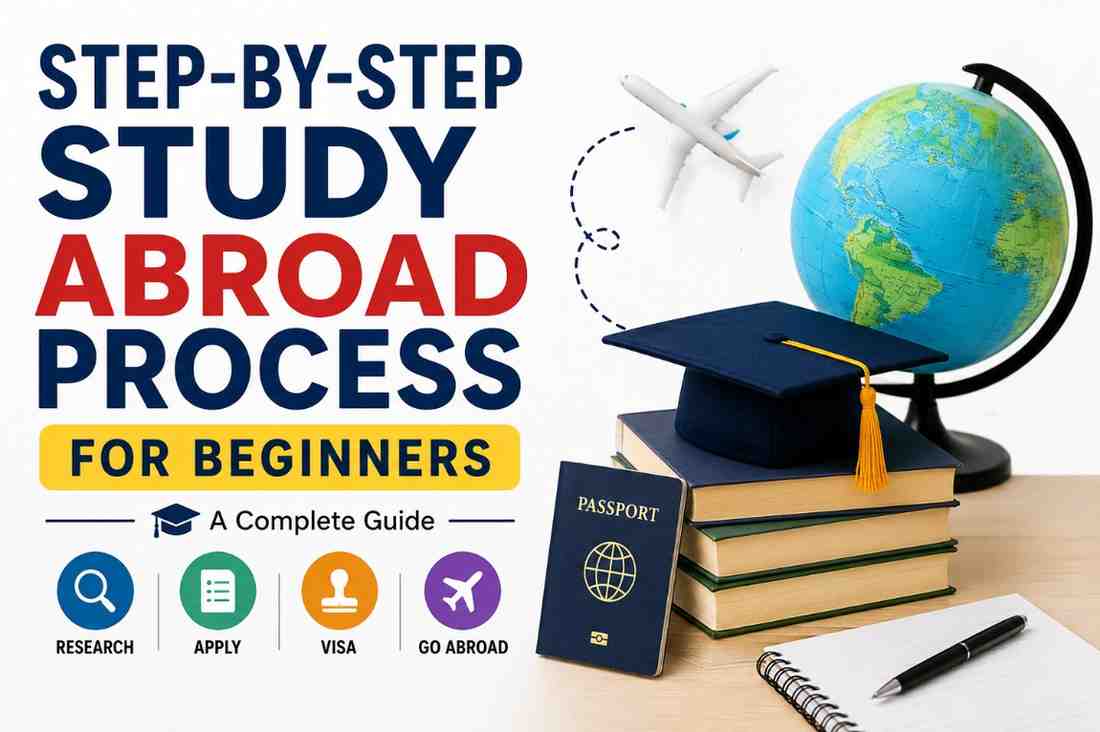
For millions of students throughout the world, studying abroad is a dream. Studying abroad can drastically change your future, from gaining access to a top-notch education and exposure to various cultures to developing a prosperous international profession. However, a lot of novices are unsure of where to begin, what paperwork is needed, how to apply, and how to budget.
From selecting a place to boarding your aircraft, this comprehensive, step-by-step study abroad guide for beginners will help you grasp the entire process.
It's crucial to comprehend the advantages of studying overseas before beginning the process:
Determining your career goal is the first and most crucial step.
Choosing the right course is more important than selecting a country. Your course should match your career interests and future job market demand.
Regarding college costs, chances of finding work, visa regulations, and lifestyle, each country has unique advantages.
Top universities in the globe
strong job market
Excellent opportunities for research
popular STEM courses
Affordable education
Easy PR paths
A secure environment
Good options for post-study employment
shorter period in the course
recognized worldwide degrees
solid reputation in academics
A high standard of living
Student-friendly regulations
Good potential for part-time work
Public universities have minimal or no tuition costs.
Outstanding engineering education
expanding tech industry
Strong need for IT specialists
Once you've decided on your course and country, begin looking at universities.
Tuition Fees and University Rankings
Possibilities for scholarships
Curriculum for courses
Possibilities for internships
Placement percentages
Campus amenities
Reviews by students
Accommodation expenses
Options for part-time employment
Three Ideal Colleges
Three Moderate Universities
Three Secure Universities
This improves your chances of getting admitted.
The requirements for admission vary by university
Marksheets for grades 10 and 12
Transcripts of bachelor's degrees (for master's applications)
English Language
Exams: IELTS, TOEFL, PTE, and Duolingo English Test
IELTS is not a requirement for admission to some universities.
GRE, GMAT, SAT
Work Experience mostly necessary for master's and MBA programs.
Most international universities require proof of English language proficiency.
| Test | Accepted Countries | Duration |
|---|---|---|
| IELTS | Worldwide | 2 hours 45 mins |
| TOEFL | USA & Canada | Around 2 hours |
| PTE | Australia, UK, Canada | Around 2 hours |
| Duolingo | Many universities | 1 hour |
Regularly practice mock exams
Expand your vocabulary
Watch podcasts and videos in English
Concentrate on speaking with confidence.
Read newspapers every day.
One of the most crucial aspects of the study abroad procedure is documentation.
Scholarly Writings
Marksheets
Certificates of degree
Transcripts
A passport
Passport-sized photos
Purpose Statement (SOP)
Recommendation letters (LOR)
CV or resume
Statements from banks
Proof of income
Documents for sponsorship
If necessary, IELTS, TOEFL, PTE, GRE, GMAT, and SAT
Prepare hard copies as well as soft copies.
One of the most crucial items in your application is your SOP.
Your educational background
Career objectives
Why did you choose the course?
Why did you choose the university?
Why you should be admitted
Make sure it is unique and free of plagiarism.
Be professional and unambiguous.
Mention your professional objectives.
Don't use online templates.
Give a sincere explanation of your motivation.
Your chances of being admitted can be greatly increased with a well-written SOP.
Apply as soon as all of the paperwork is prepared.
Direct University Application
Use the university's official website to apply.
Through Consultants or Educational Platforms: For applications and paperwork, some students prefer expert advice.
The application costs that many colleges demand range from:
$20–$150.
There are universities that waive tuition.
Scholarships can lessen the cost of studying overseas.
Merit-Based Scholarships
Scholarships Based on Need
Scholarships from the Government
Scholarships at Universities
Scholarship deadlines are short, so submit your application as soon as possible.
If selected, universities will send:
You must fulfill pending requirements.
You are officially accepted.
After receiving offers, compare:
Then go with the finest choice.
You have to provide evidence of your ability to pay for living expenses and tuition.
Self-Supporting
Accessible from:
Before relocating overseas, make a sound financial plan.
Apply for a student visa as soon as you have your admission confirmation
Valid passportUniversity admission letterFinancial evidenceApplication for a VisaEnglish test results and medical records
Be confident
Bring Essential Items
Studying overseas can appear difficult at first, but it gets much simpler if you follow the steps. Careful planning, early preparation, and thorough research are crucial.
Establish your objectives, select the appropriate course and nation, get your paperwork ready, apply to colleges, find funding, and finish the visa application procedure on schedule.
Recall that studying overseas is about more than just earning a degree; it's about creating a brighter future, expanding your horizons, and having experiences that will change your life.
Your dream of studying abroad in 2026 can definitely come true if you start preparing early and maintain organization.
Studying abroad begins long before stepping onto an international campus. The most successful inte...
IntroductionThe United States remains the #1 study destination for Indian students in 2026, offering...


Choosing what to do after 10th grade is one of the first big decisions in a student’s life. Many stu...
Studying abroad is a dream for many Indian students, but high tuition fees often make it seem diffic...