
Best Online Courses for Students Planning to Study Abroad (2026)
Studying abroad begins long before stepping onto an international campus. The most successful inte...

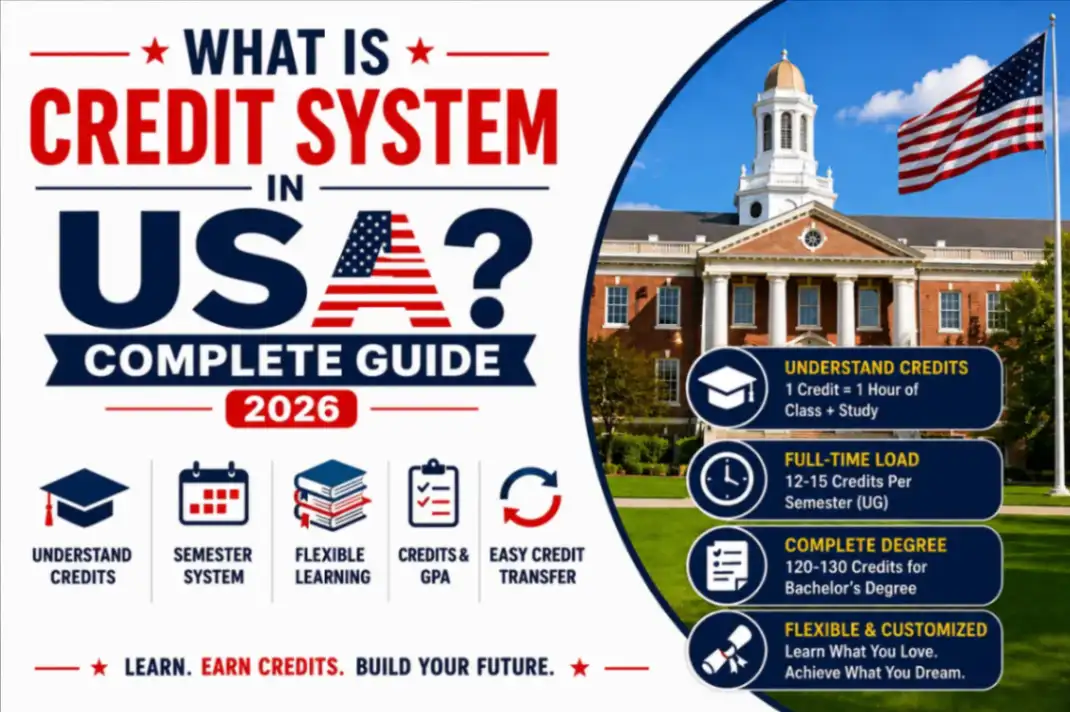
One of the biggest confusions Indian students face while planning to study in the United States is understanding the credit system. Unlike India, where courses are mostly year-based or percentage-driven, American universities follow a flexible academic structure based on credits.
The credit system allows students to customize learning, choose subjects according to career goals, and progress academically at their own pace.
Before applying to universities through platforms like Infichoice, it is important to clearly understand how credits, semesters, GPA, and course completion actually work in the USA.
In simple terms, a credit represents the amount of academic work completed for a course.
A single credit generally corresponds to:
For example:
If a subject is worth 3 credits, it usually means:
Credits measure learning workload rather than just exam performance.
The US education model focuses on flexibility and skill development rather than rigid academic structures.
Key reasons behind the credit system include:
This system is widely accepted globally, which helps students pursuing international careers.
Most universities in the United States follow a semester system, though some institutions use quarter systems.
| Academic Term | Duration |
|---|---|
| Fall Semester | August – December |
| Spring Semester | January – May |
| Summer Term (Optional) | May – August |
Students typically enroll in courses every semester and earn credits after successfully completing them.
A full-time student usually takes 12–15 credits per semester.
Undergraduate programs in the USA normally require 120 to 130 total credits for graduation.
| Course Category | Approximate Credits |
|---|---|
| General Education Courses | 30–40 |
| Major/Core Subjects | 40–60 |
| Electives | 20–30 |
| Projects/Internships | Variable |
A Computer Science student may study:
Total Semester Load = 13 credits
Students accumulate credits semester by semester until reaching graduation requirements.
The US system allows academic flexibility through structured choices.
The primary subject specialization, such as Computer Science, Business Administration, or Biology.
A secondary subject chosen alongside the major, for example:
Optional courses selected based on interest, helping students explore new fields.
This flexibility is one of the biggest advantages compared to rigid degree systems.
Graduate programs require fewer credits but demand deeper specialization.
| Program Type | Total Credits Required |
|---|---|
| MS Degree | 30–36 credits |
| MBA | 36–60 credits |
| Professional Masters | 30–45 credits |
Students normally take 9–12 credits per semester.
Many US universities offer two pathways.
| Type | Description |
|---|---|
| Thesis Track | Includes research project and thesis defense |
| Non-Thesis Track | Course-based with exams/projects |
Indian students interested in research or PhD progression often choose the thesis option.
Doctoral programs combine coursework with intensive research.
| Phase | Credit Requirement |
|---|---|
| Coursework Phase | 30–60 credits |
| Research Credits | Continuous enrollment |
| Dissertation | Mandatory |
Unlike UG or MS programs, PhD duration depends on research progress rather than fixed semesters.
Average completion time ranges between 4–6 years.
Instead of percentage marks, US universities use GPA (Grade Point Average).
Grades are assigned based on performance in each course.
| Grade | Grade Point |
|---|---|
| A | 4.0 |
| B | 3.0 |
| C | 2.0 |
| D | 1.0 |
| F | 0 |
Each course grade is multiplied by its credit value to calculate GPA.
| Course | Credits | Grade | Points |
|---|---|---|---|
| Data Science | 3 | A | 12 |
| Statistics | 3 | B | 9 |
| Programming | 4 | A | 16 |
Total GPA = Total Points ÷ Total Credits
This system ensures continuous evaluation instead of relying only on final exams.
Universities define enrollment status based on credits.
| Student Status | Credits Per Semester |
|---|---|
| Full-Time Undergraduate | 12+ credits |
| Full-Time Graduate | 9+ credits |
| Part-Time Student | Below full-time load |
International students must usually maintain full-time status to comply with visa rules.
One major advantage of the US system is credit transferability.
Students can:
However, transfer approval depends on course equivalency and institutional policies.
Although most universities follow similar structures, minor variations exist.
Some institutions divide the academic year into three shorter terms.
| Term | Duration |
|---|---|
| Fall Quarter | Sep – Dec |
| Winter Quarter | Jan – Mar |
| Spring Quarter | Apr – Jun |
Students take fewer courses but more terms annually.
Examples include certain universities in California and private institutions.
Indian students often find the US model beneficial because it offers academic freedom rarely available in traditional systems.
Students can:
This flexibility improves employability and career adaptability.
Many first-time applicants misunderstand credits. Some common misconceptions include:
Proper academic planning with mentors can prevent delays in degree completion.
Infichoice simplifies the study abroad journey by providing structured guidance beyond university listings.
Students can use Infichoice to:
Instead of relying on scattered online information, students receive organized guidance through one platform.
The US credit system may initially feel confusing for Indian students, but once understood, it becomes one of the most student-friendly education models in the world.
Instead of forcing everyone into identical academic paths, the credit system allows students to design education according to their interests, career goals, and learning pace.
Understanding credits, GPA calculation, semester planning, and graduation requirements helps students avoid academic stress and make smarter decisions while studying in the United States.
With proper guidance, planning, and support platforms like Infichoice, students can confidently navigate the US education system and focus on building successful global careers.


Studying abroad begins long before stepping onto an international campus. The most successful inte...

Applying to universities in the United States is an exciting step toward building a global career. H...

Studying abroad is a dream for many Indian students. Every year, thousands of students choose count...


Australia has emerged as one of the most sought-after destinations for master’s studies, offering wo...