
Why Every Study Abroad Student Needs a Mentor (2026 Guide)
Studying abroad is no longer just an academic decision — it is a life transformation journey. Every...

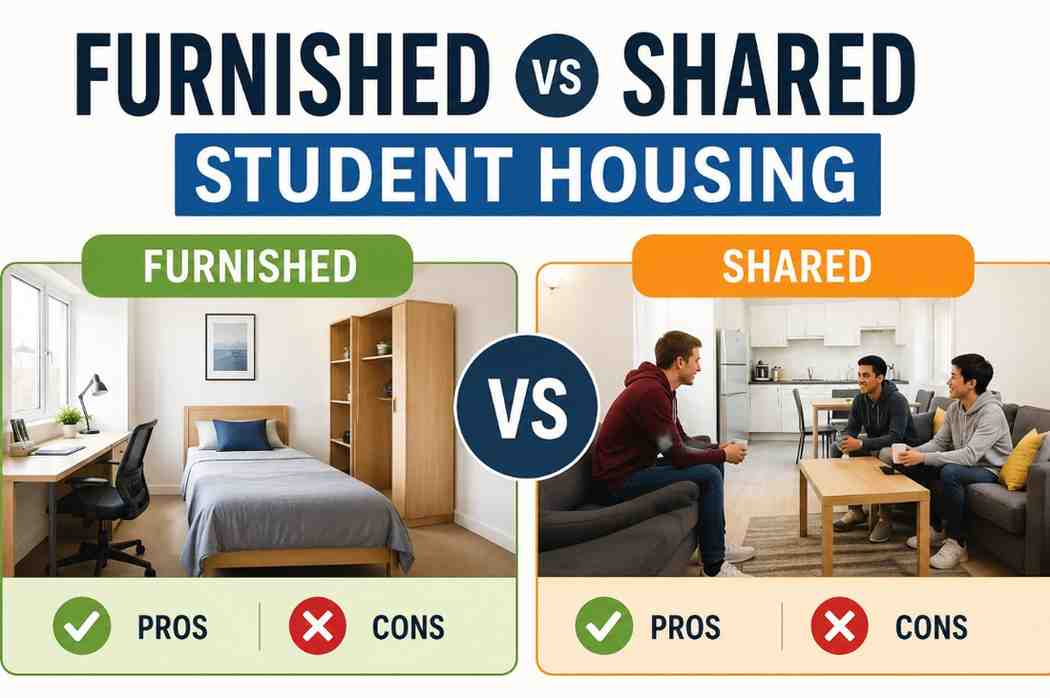
Finding the right student accommodation is one of the biggest decisions for students planning to study abroad. Your housing choice affects your comfort, budget, academic performance, and social life. Two of the most popular options are furnished student housing and shared student housing. While both have their advantages, the right option depends on your lifestyle, budget, and personal preferences.
Students moving to countries like the USA, UK, Canada, Australia, or Europe often compare these accommodation types before finalizing their stay. Understanding the pros and cons of each can help you make a smarter decision and avoid unnecessary stress after arriving abroad.
If you are planning your study abroad journey, platforms like Infichoice can help students explore universities, colleges, and accommodation-related guidance in one place.
Furnished student housing refers to accommodation that already includes essential furniture and appliances. These properties are designed for convenience and usually come with:
Furnished housing is common in university dormitories, private student apartments, and managed accommodation complexes.
Shared student housing means living with roommates in the same apartment, flat, or house. Students usually share common spaces like:
Shared accommodation can be either furnished or unfurnished. The main advantage is that the rent and utility costs are divided among multiple tenants.
One of the biggest benefits of furnished accommodation is convenience. International students often arrive with limited luggage and cannot buy furniture immediately. Furnished housing allows students to settle in quickly without worrying about buying beds, tables, or kitchen items.
This is especially helpful for first-year international students adjusting to a new country.
Shopping for furniture in a foreign country can be expensive and time-consuming. Furnished student apartments eliminate the need to:
Students can focus more on academics and adapting to campus life.
If you are staying abroad for one semester, internships, exchange programs, or short-term courses, furnished housing is highly practical. You avoid investing money in furniture that you may not use long term.
Many international students prefer furnished housing because it reduces stress after arrival. Everything is ready from day one, making the transition smoother.
Some student accommodations also include:
Many furnished student accommodations include utilities within the rent. This helps students manage monthly expenses better because there are fewer surprise costs.
Furnished apartments are usually more expensive than unfurnished options. The convenience comes at a premium price, which may not suit students with tight budgets.
Students may not be allowed to modify furniture arrangements or decorate extensively. The room may feel less personal compared to setting up your own space.
Since furniture and appliances belong to the property owner, students may face penalties for damages. Even small issues can result in deductions from the security deposit.
In furnished shared apartments, common furniture may be used heavily by roommates, leading to wear and tear or maintenance issues.
Shared housing is one of the most budget-friendly accommodation options for students. Rent, electricity, internet, and groceries are divided among roommates, reducing overall living expenses.
This is particularly useful in expensive student cities like:
Students can save significant money by sharing accommodation.
Living with roommates helps students build friendships and reduce loneliness, especially when studying abroad for the first time.
Shared housing often creates:
Many lifelong friendships begin in student shared apartments.
Shared living teaches valuable life skills such as:
These experiences help students become more independent and mature.
Students can choose roommates based on:
This flexibility helps create a comfortable living environment.
Household tasks become easier when responsibilities are divided among roommates. Students can rotate duties such as:
This reduces individual workload.
Privacy is one of the biggest sacrifices in shared accommodation. Students may need to share bedrooms, bathrooms, or common areas.
Noise and interruptions can sometimes affect study routines.
Different lifestyles and habits may lead to disagreements about:
Choosing compatible roommates is very important.
Social environments can sometimes become distracting. Frequent gatherings, parties, or late-night activities may affect academic focus.
Not all roommates contribute equally. Some students may end up handling more chores or paying bills on time for others.
This can create frustration within the household.
Students who prefer quiet environments or private study areas may struggle in shared housing arrangements.
There is no single perfect answer because every student has different needs.
Many students actually choose a combination: furnished shared housing. This option offers both affordability and convenience.
Before selecting accommodation, students should evaluate:
Calculate monthly rent, utilities, transportation, and food costs.
Choose housing close to campus or public transportation.
Research neighborhood safety and building security.
Check internet speed, laundry access, kitchen facilities, and study areas.
Understand contract duration, deposits, and cancellation policies.
If choosing shared housing, select roommates with similar habits and schedules.
Choosing between furnished and shared student housing depends on your priorities, finances, and comfort level. Furnished accommodation provides convenience and a smooth transition for international students, while shared housing offers affordability and social experiences.


Studying abroad is no longer just an academic decision — it is a life transformation journey. Every...

IntroductionThe global student ecosystem is changing faster than ever. Today’s students are not jus...